Men’s Work: The Way Through Confusion Around Masculinity
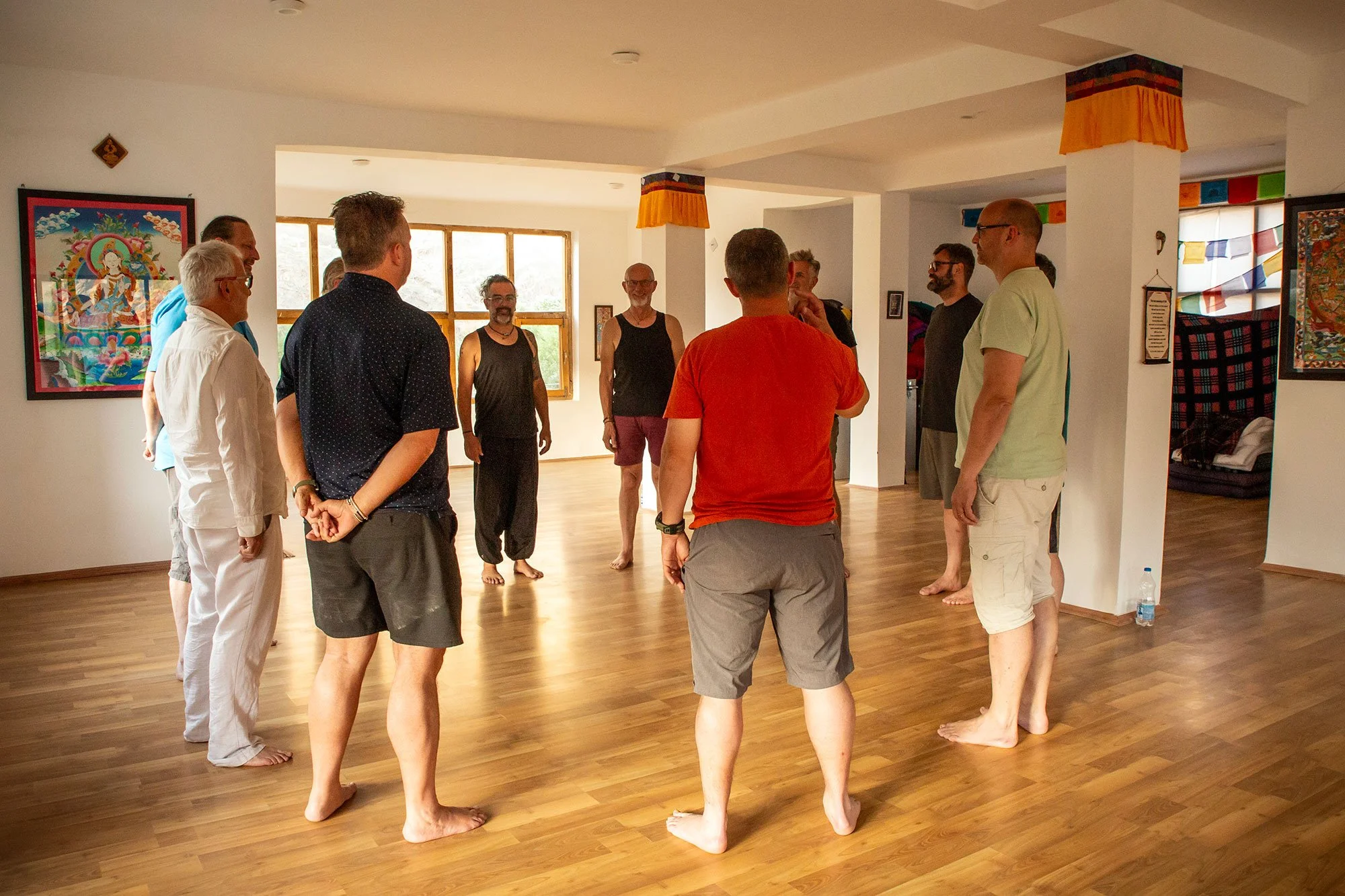
Anywhere we turn, there’s quite a lot of noise right now about what it means to be a man. Depending on where you look, you’ll hear very different messages. At the extremes, some say masculinity itself has always been the problem, outdated, harmful, in need of correction, while others push the pendulum back hard, in the opposite direction, doubling down on old ideas: men should dominate, suppress emotions, stay in control at all costs, without any need for self-awareness or accountability.
Most men don’t fully agree with either side. And thus are left in the middle, without a clear path forward. That’s where the real problem begins. Not so much with masculinity itself, but with all the confusion around it.
The Two Extremes, and Why They Don’t Help
On one side, masculinity is often framed as something inherently dangerous. Strength becomes aggression. Leadership becomes control. Even natural traits like competitiveness or drive are treated with suspicion. On the other side, there’s a reaction to that. A return to rigid roles. Men are told to be dominant, unemotional, always in charge. Vulnerability is weakness. Pain is not to be expressed. Struggle is something to hide.
Both of these views miss something important: They reduce masculinity to narrow definitions. According to these extreme views, it is either something to suppress or something to defend at all costs.
Most men don’t live comfortably in either of those worlds. They’re trying to build a life, take care of responsibilities, navigate relationships, learn to find their natural expression as men, and connect to some sense of meaning. They don’t need ideology. They need practical tools that work.
What Grounded Masculinity Actually Looks Like
Strip away the deafening noise and what most men are looking for is surprisingly simple: They want to feel steady. Clear. Capable. They want to feel connected. They need a sense of belonging.
They want to:
Handle pressure without shutting down or exploding
Speak honestly without losing control
Build strong and healthy relationships with partners, friends, and themselves first and foremost
Make decisions with confidence, not second-guessing everything
Have a sense of purpose and direction, even if they don’t have it all figured out (who does anyway?)
This isn’t about becoming a “better man” in some abstract sense. It’s about becoming more grounded in oneself. Expressing one’s own masculinity as an individual, one that comes from within and isn’t built through slogans or beliefs. It finds its way to expression through experience, deep self-reflection, and honest feedback, especially from other men. And this is where most men hit a wall.
Why Most Men Struggle Alone
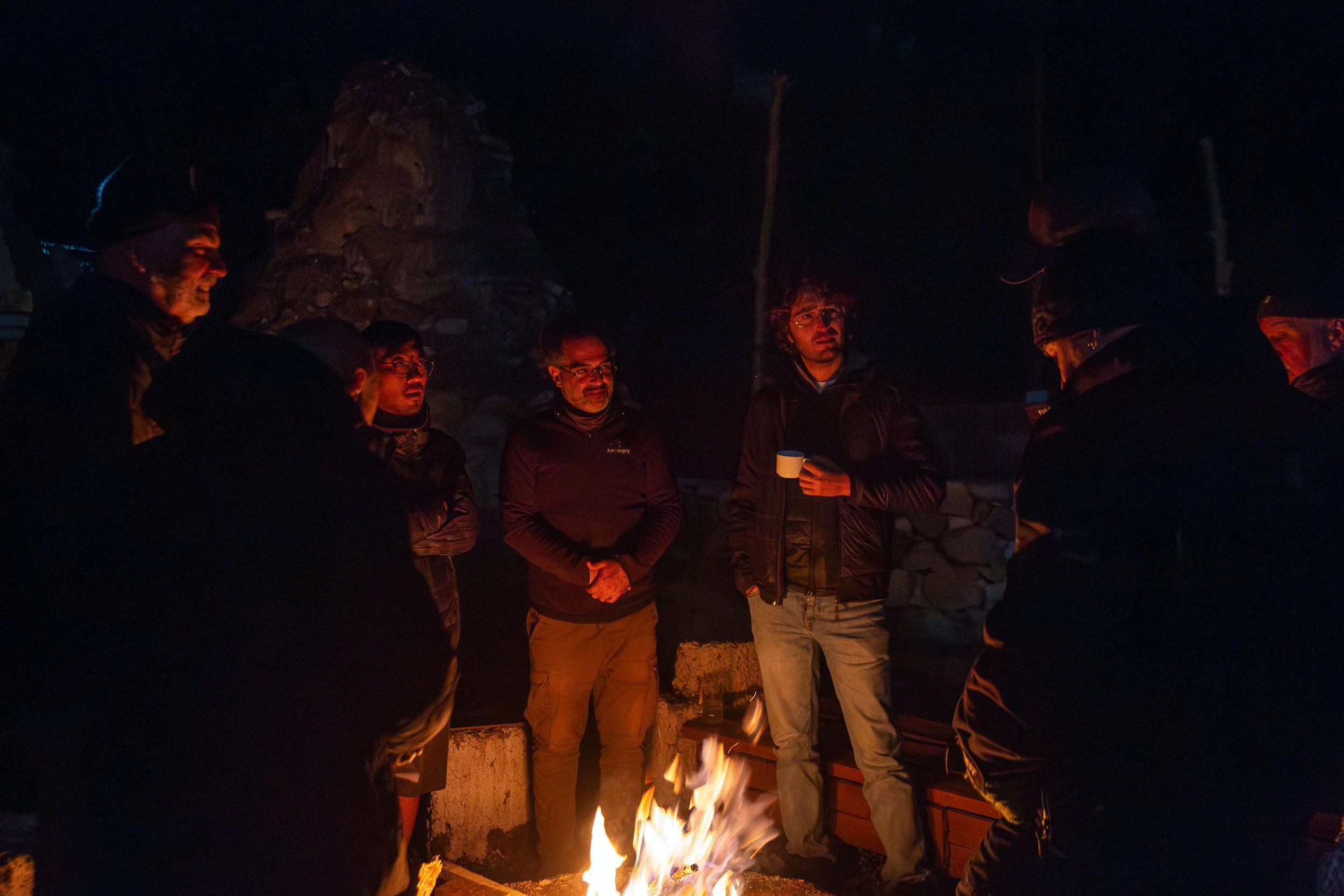
At some point, usually around their early 30’s, many men lose deeper connection with other men. Friendships become surface-level. Conversations stay practical and never very deep, usually around work, logistics, maybe some humor or irony on the hindrances of life. ANd they rarely go any deeper than this. There’s little space to talk honestly about stress, self-doubt, relationships, or internal pressure.
It’s not that men don’t have anything to say. Because they do. It’s that culturally and socially there’s nowhere to say it. Over time, this creates quiet and deep isolation. Even men with families, careers, and active lives can feel like they’re carrying all the weight alone.
Add to that:
The pressure to perform in a certain way
The expectation to “figure it all out” without asking for help
The lack of role models who show a deeply balanced way of being
And it’s no surprise many men feel stuck, even if things appear to be just fine on the outside. Trying to solve this alone usually leads to one of two outcomes:
Pushing even harder, staying busy, avoiding the deeper questions
Or withdrawing, feeling disconnected, unsure what’s missing
Neither of which leads to real clarity and subsequent growth.
What Men’s Work Actually Is
Men’s work is not one format. At its core, men’s work is about creating the conditions where a man can see himself more clearly, take full responsibility for his life, and grow in a deeper and more grounded way.
Men’s work is a space where men come together to do something most don’t get to do elsewhere:
They get to take a deeper look inside. They get to speak honestly. They learn to witness other men and to listen without interruption. They exercise being, as opposed to doing. And as they become more comfortable just being, the space opens for deep reflection. And ultimately for self-growth. That’s it. It’s not about adopting a belief system. It’s not about becoming someone else. And it’s not about sitting in a circle talking about feelings in a vague or forced way. At its core, men’s work is structured, grounded, and practical.
One of the most common tools in men’s work are men’s groups, meeting in men’s circles. Other spaces include workshops, one day activities exclusive for men, and men’s retreats.
What Happens Inside a Men’s Circle
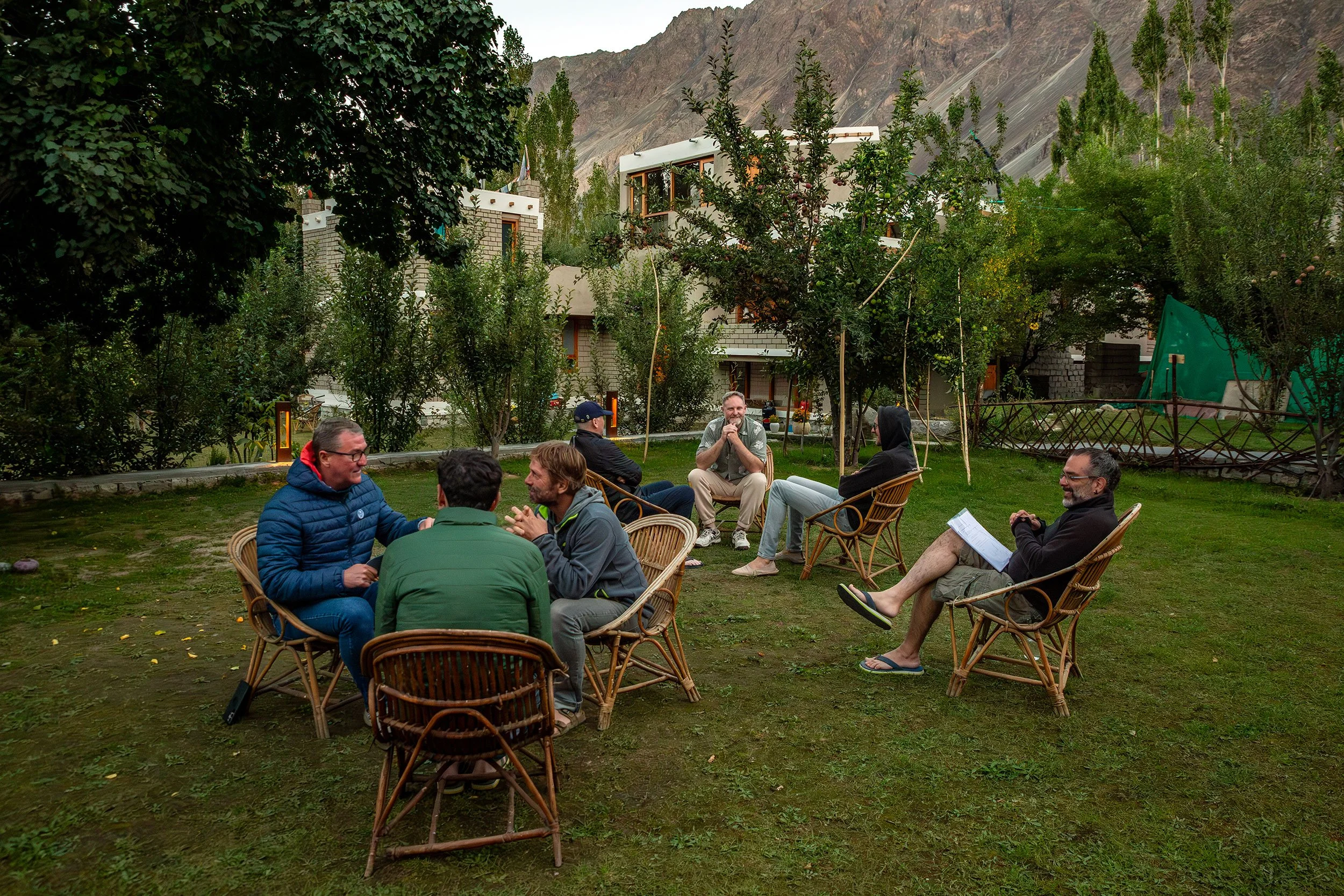
For many men, the first experience is unexpected. There’s often less talking than they imagined and more listening instead. Less advice and more witnessing. Something shifts when you sit in a room where:
No man is trying to impress another man
No man is competing
No man is telling another what he should do
Instead, you hear real experiences. Struggles that sound familiar. Perspectives you hadn’t considered. You start to see your own situation more clearly because you’re no longer looking at it in isolation.
Over time, a few things tend to happen with every man:
One becomes more honest, with yourself first, then with others.
One reacts less impulsively, because he is more aware of what’s actually going on inside. And even if he “fails”, he “fails” with more awareness.
One gains perspective, as problems don’t disappear, but become more manageable.
One feels less alone, even if nothing external has changed yet.
This isn’t dramatic or instant. It’s a practice. And with time and commitment it becomes steady. And that’s the point.
One-Day Experiences and Courses: A Practical Entry Point
For many men, the most accessible way into this work is through one-day experiences or short courses. These often take place in natural settings or dedicated spaces, away from the usual distractions. The structure is simple but intentional: many times comprising a mix of physical activity, reflection, and practical input.
A typical day might include:
Breathwork or guided practices to shift your state and focus
Physical challenges, yoga or workouts that bring you into your body
Cold exposure, like ice baths, to build presence and reselience
Short talks or discussions on topics like stress, habits, health, or relationships
Time to reflect, individually or with others
These experiences work because they are practical and direct. You’re not just thinking about tools for change, you’re experiencing them in real time. They also remove a common barrier: the idea that men’s work is only about talking. Due to natural hard-wiring, for many men, starting with action feels more natural. From there, reflection becomes easier and more relevant.
Short formats like these don’t require a big commitment, but they can create a clear shift:
More awareness of your habits and patterns
A sense of reset, physically and mentally
A first experience of being around other men in a more honest way
For some, this is enough to spark deeper interest. For others, it becomes a regular way to recalibrate.

Motorcycle Retreat for Men in the Indian Himalayas
Men’s Retreats: Stepping Out to Go Deeper
While one-day experiences create a shift, retreats create time off and space for deeper change. When you step away from your usual environment for several days, something important happens: the constant drives, work, responsibilities, distractions, drop away. What’s left becomes easier to see.
Men’s retreats combine many elements of men’s work into a more immersive experience:
Daily practices like yoga, or meditation
Men’s circles and group work for honest conversation
Physical challenges and shared activities
Time in nature, away from constant stimulation
Structured exercises that help you reflect on your life, choices, and direction
But the real value of a retreat isn’t in any single activity. It’s in the continuity.
Instead of touching the surface and then returning immediately to your routine, you stay with the process long enough to:
See patterns more clearly
Have conversations you wouldn’t normally have
Step back and reassess your priorities
Experience a different way of relating to yourself and to others
For many men, this is where things start to shift more meaningfully, as there is finally enough space for clarity to emerge.
The Real Benefits of Men’s Work
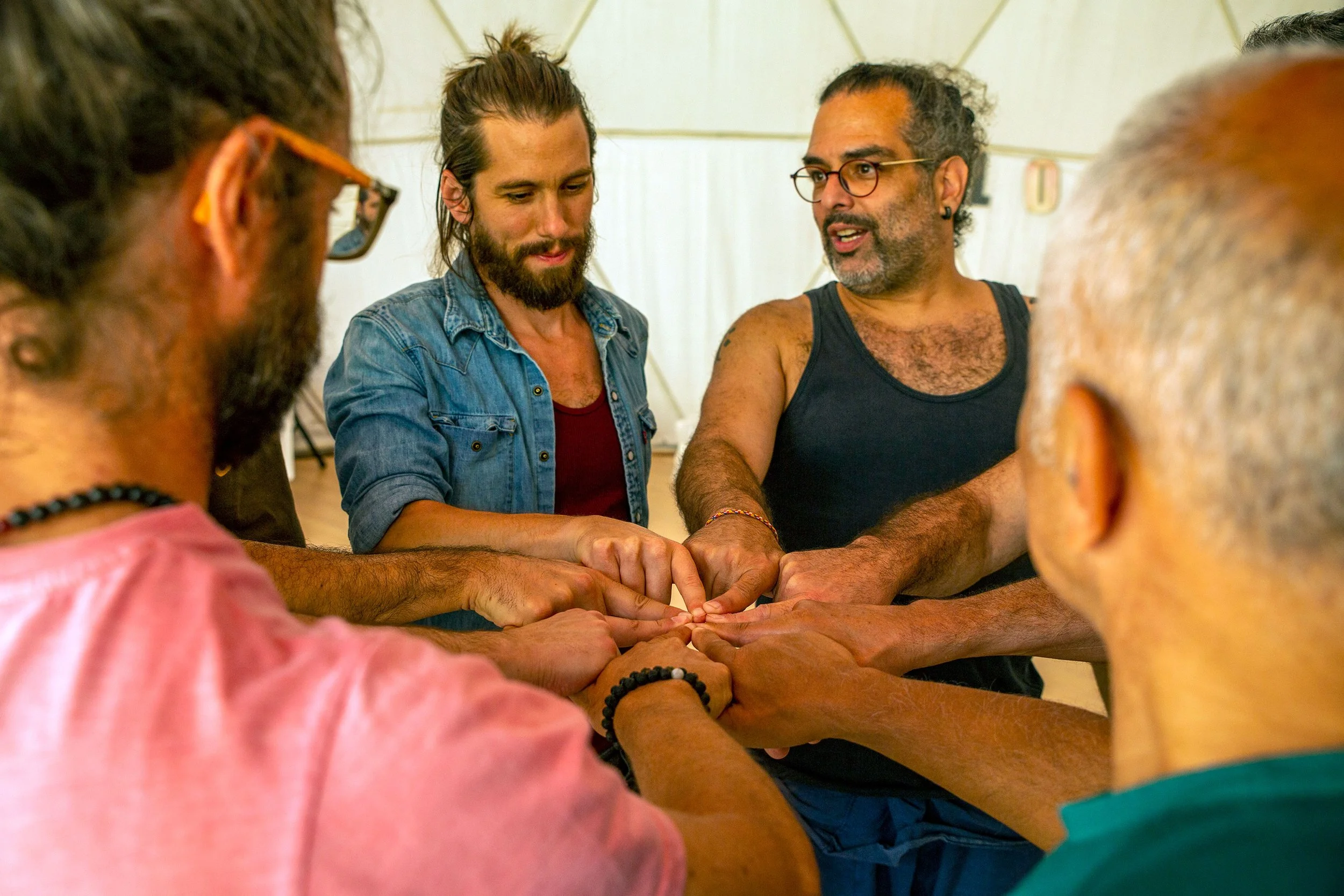
Men’s work is about becoming more functional with oneself and others, in the best sense of the word. Men who engage in this kind of work often notice:
Clearer thinking - Less mental noise. Better decisions. More focus on what actually matters.
Stronger relationships - Better communication. Less reactivity. More presence with partners, family, and friends.
Emotional stability - Better ability to handle life’s ups and downs without being overwhelmed.
A sense of direction - Knowing what your next step is, without the need to have all the answers.
A grounded sense of self - Less need to prove yourself, more comfort in who you are.
These are not abstract benefits. They show up in everyday life at work, at home, in how you show up to yourself and others.
When You Can’t Always Show Up in Person
Not every man is ready to step into a circle right away. Some prefer to start privately, at their own pace, without having to speak in front of others. That’s where online courses like The Grounded Man come in.
Designed as a practical entry point into men’s work, something you can engage with on your own, in your own time. The focus is the same: clarity, emotional awareness, responsibility, and a more grounded way of moving through life. Instead of theory, it offers structured guidance:
Short, focused lessons
Reflection exercises you can actually apply
Tools to better understand your reactions, patterns, and decisions
For some men, this becomes the first step. A way to build awareness and confidence before stepping into a group space. For others, it complements the work they’re already doing, helping integrate what comes up in circles into daily life. Either way, it removes one of the main barriers: the idea that you have to jump straight into something unfamiliar.
Why Many Men Hesitate at First
Yes, there’s often resistance at first, and it’s often part of the process. While some men think it’s not for them, others assume it will be too intense, too fluffy, or just not relevant for them. That hesitation is normal, as most men have never experienced a space like this before, let alone thinking it might me meaningful for them. And without that experience, it’s easy to misunderstand what it is. But the reality is much simpler:
You don’t need to be struggling to join.
You don’t need to be “into” personal development.
You don’t need to know what to say.
You don’t need to come with an “issue” or a “problem” to solve
You just need to be willing to show up and see the space for yourself. More often than not, it’s a space where most men didn’t expect to feel so much at home.
Sacred Grounds: A Place to Start
At Sacred Grounds CNX, this work is offered in a grounded, accessible, and practical way. The weekly men’s circles on Saturdays are a place to step out of the noise and into something more real without pressure or performance. Alongside these, there are other ways to support the process:
Yoga and meditation, to build awareness and steadiness in the body and mind
Free-form writing sessions, to clarify thoughts and get things out of your head
Cold plunges and other men-only events, to challenge yourself and connect in a direct, physical way
A broader community space, where conversations can happen naturally
None of this is about becoming someone different. It’s about becoming more aligned with who you are, just with more clarity and less confusion.
There’s no single way to be a man, but there is a difference between drifting through it as a lone wolf and actively exploring it it with others who can support you and help you on the path. Men’s work offers a way to do that through experience. Just step in whether in a circle, a class, or a gathering. That’s usually enough to know whether it’s something you’ve been missing, without .