A men's circle may look simple from the outside: men sitting together, talking, listening and sharing their experiences. But creating the conditions for honest, safe and meaningful conversation is a skill.
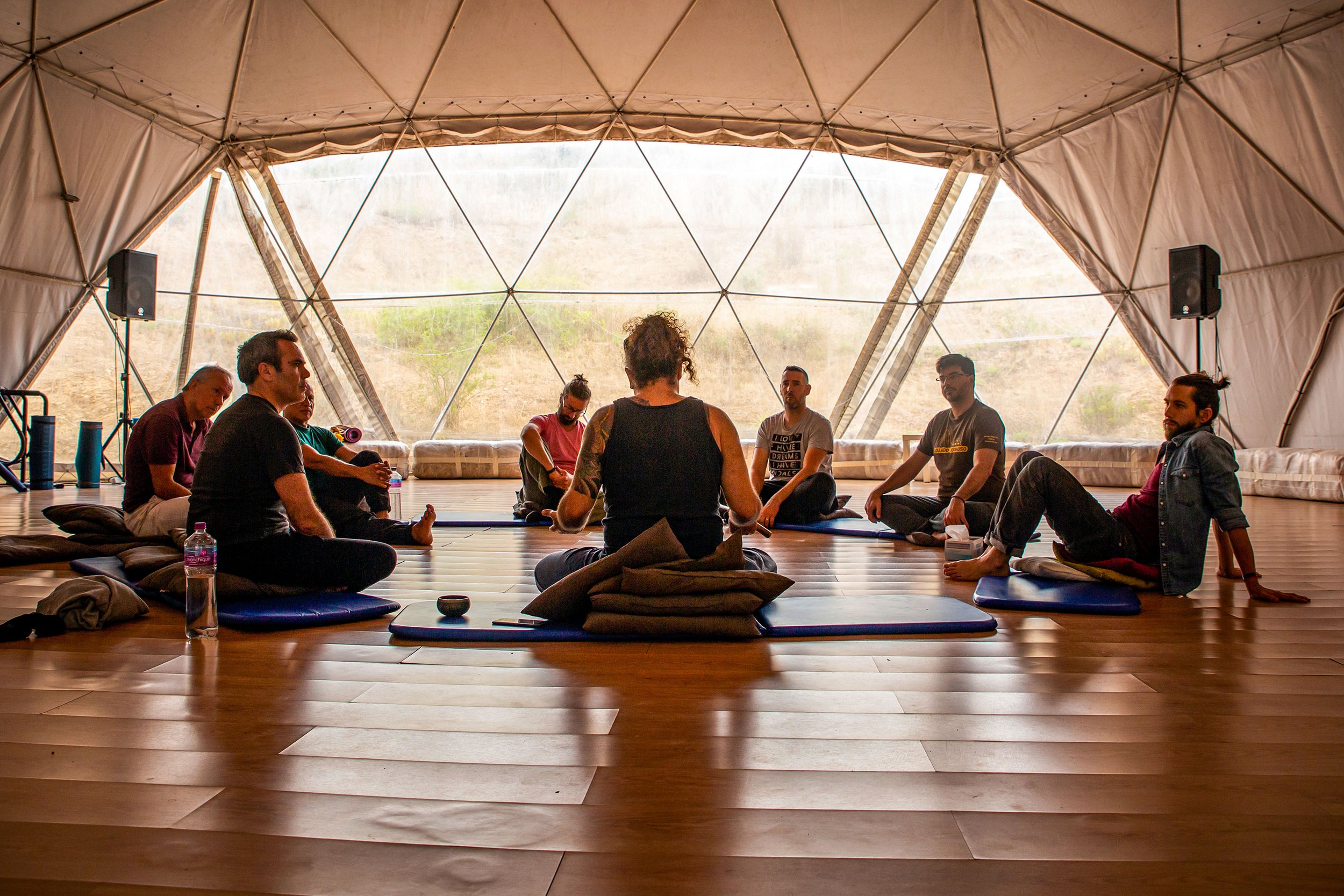
Anyone can gather a group of men. Facilitating that group well is something else entirely. A good men's circle does not depend on the facilitator having all the answers, being the most experienced therapist in the room or being particularly charismatic. It depends on his ability to create and protect the conditions in which men can speak honestly, listen deeply, take responsibility and connect with one another. That is the difference between leading a conversation and facilitating a group process (not group therapy). And it is why skilled facilitation matters.
What Does a Men's Circle Facilitator Actually Do?
A men's circle facilitator is responsible for much more than choosing a topic and asking questions. He pays attention to the whole group. He notices who is speaking and who is withdrawing. He senses when a conversation needs more time and when it is beginning to go in circles. He knows when silence is useful and when the group needs direction.
He establishes agreements and boundaries. He helps create psychological safety. He manages difficult moments without unnecessarily shutting them down. He keeps the group connected to its purpose. Most importantly, he does not make the circle about himself. A facilitator's job is not to become the expert in the room. His job is to help the group become a place where depth can happen.
Gathering Men Is Not the Same as Facilitating a Men's Circle
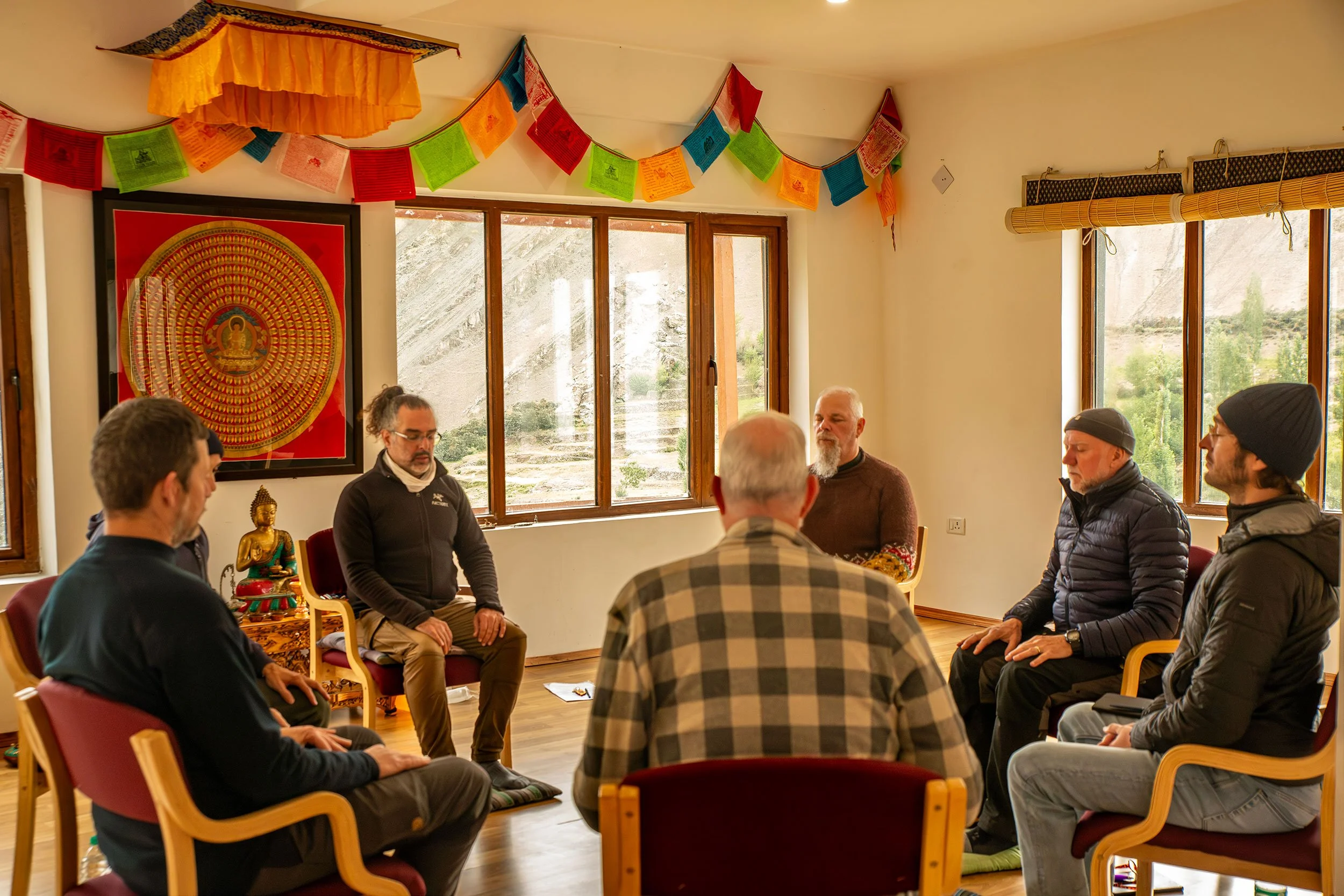
Imagine inviting eight men into a room and asking: "What's going on for you at the moment?" You might get a great conversation, and you might also get silence. One man might talk for twenty minutes. Another might make jokes whenever things become uncomfortable. A man might start giving advice to everyone. Two men might start a political debate about the current world affairs. One other man might quietly disappear into the background without anyone noticing. None of this is unusual.
A group has its own dynamics, and those dynamics begin operating as soon as people come together. This is why a men's circle needs more than good intentions. A skilled men's group facilitator learns to notice what is happening within the group as a whole, not simply what each individual is saying. That requires awareness, practice and discernment.
Psychological Safety Doesn't Happen by Accident
Many men are unlikely to speak honestly if they don't feel safe enough to do so. Psychological safety does not mean that everyone must feel comfortable all the time. A meaningful conversation can involve discomfort, challenge, disagreement and vulnerability. Safety means that participants know they can speak without being humiliated, ridiculed or unnecessarily exposed. It also means knowing what is expected of everyone in the room. A skilled facilitator helps establish this through clear agreements around things such as:
Confidentiality
Respect
Listening without interruption
Speaking from personal experience
Avoiding unsolicited advice
Respecting different perspectives
The right to pass one’s turn
Boundaries
These agreements are not minor details. They are part of the foundation of the circle. When men know that the space has boundaries, they can often take greater risks within those boundaries.
A Facilitator Needs to Understand Group Dynamics
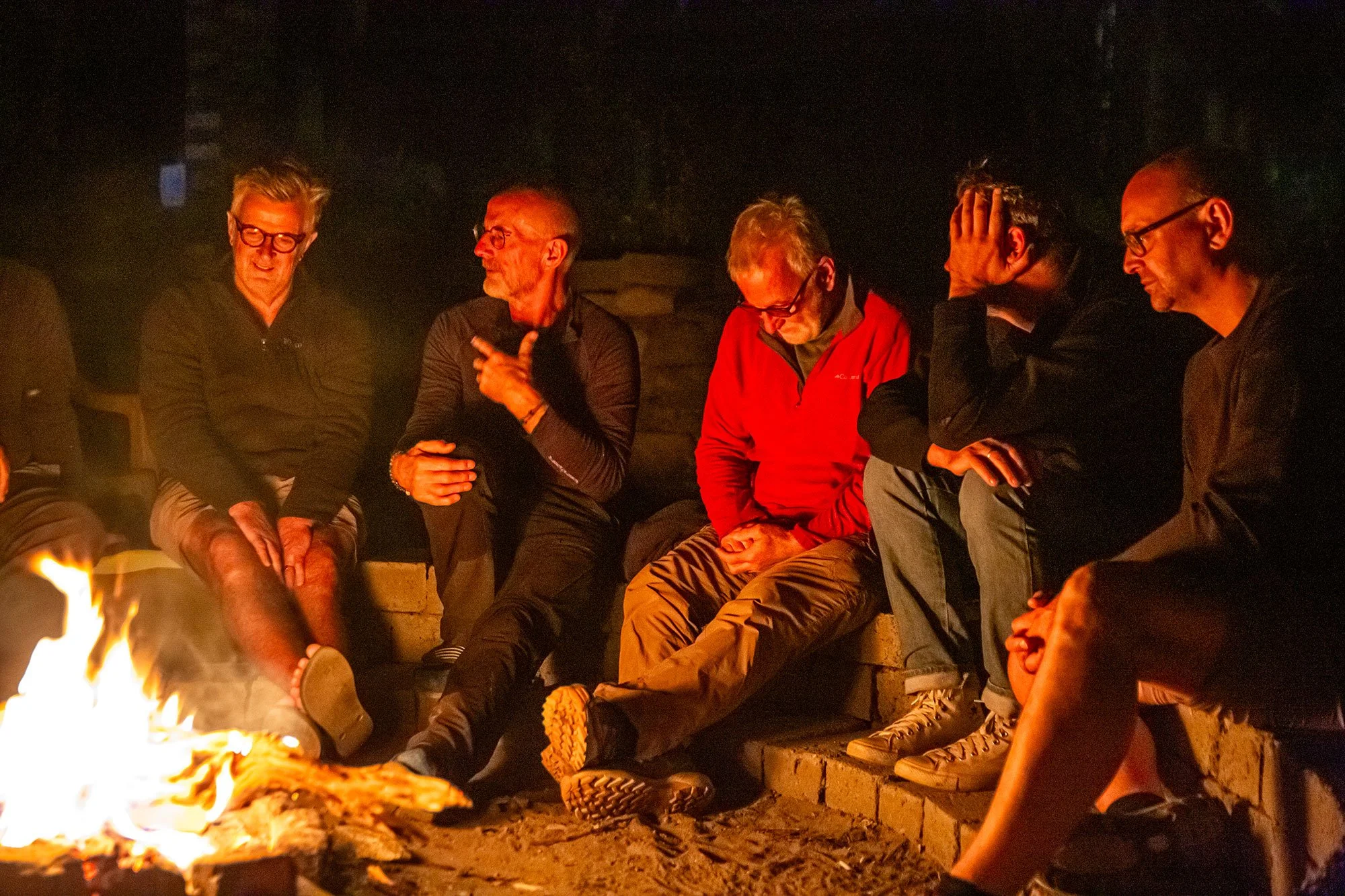
A group is more than the sum of its members. Put several men together and patterns can quickly emerge: One man becomes the storyteller, another becomes the adviser, another rarely speaks. Someone may use humour whenever the conversation gets close to something vulnerable. Another man may challenge everything, including the agreements. These patterns may happen without anyone consciously deciding that they should. This is where the facilitator needs to develop what could be called group awareness. Instead of focusing exclusively on the content of the conversation, he also asks himself:
Are all men being heard?
What is happening underneath the conversation?
Has the energy changed?
Is the group avoiding something?
Is someone becoming triggered or isolated?
Is the discussion becoming competitive?
Is the group moving toward greater honesty or away from it?
The facilitator doesn't necessarily need to intervene every time he notices something. Sometimes awareness is enough. But without awareness, intervention becomes reactive rather than intentional.
The Facilitator Is Not a Therapist
Men's circles can involve vulnerability, grief, anger, fear, shame, relationship difficulties and other deeply personal experiences. That does not make a men's circle into group therapy. A men's circle facilitator should understand the limits of his role and competence. Often times, therapists leading circles don’t understand this.
A facilitator is not there to diagnose participants, treat mental health conditions or attempt to resolve complex psychological issues within the group. Instead, he needs to know how to remain grounded when strong emotions arise. Imagine a man begins crying while sharing something deeply personal. An inexperienced facilitator might immediately try to make him feel better. He might rush to offer advice. A skilled facilitator may simply remain present. He allows the man to go through his emotions, and the group threough the experience, without making the emotion wrong or trying to remove it.
He may offer a simple question such as: "Would you like to stay with that for a moment?" or “Is there anything you need right now?” or simply invite silence. At the same time, he remains aware of the group and of the boundaries of the work.
Sometimes the appropriate response is to continue. Sometimes it is to pause. Sometimes a participant needs support beyond what a men's circle can responsibly provide. Knowing the difference is part of ethical facilitation.
Holding Space Means More Than Being Quiet
Holding Space is an expression often used in men's work, coaching and personal development. But what does it actually mean? It doesn't simply mean sitting quietly while someone talks. Holding space requires the facilitator to remain present without immediately taking over the experience. It means resisting the urge to:
Fix
Advise
Rescue
Judge
Interpret
Turn someone's experience into his own story
This can be surprisingly difficult. When another man is struggling, our natural instinct may be to help. Sometimes the most useful thing we can do is listen. A skilled facilitator learns to distinguish between helping someone and taking their experience away from them. That distinction is at the heart of good men's circle facilitation.
The Art of Listening
Facilitation begins with listening. Not listening while preparing your next response, or waiting until you can demonstrate your wisdom, or your opportunity to tell your own story. Actually listening. Actively listening. A facilitator needs to listen to what a man is saying while also noticing his tone, pace, hesitation and emotional state. Sometimes a man's words say one thing while everything else suggests something different.
A man might say: "I'm fine." The facilitator might simply ask: "When you say you're fine, what does that mean for you?"
The question creates an invitation rather than an interpretation. That difference matters.
Good Questions Open Doors
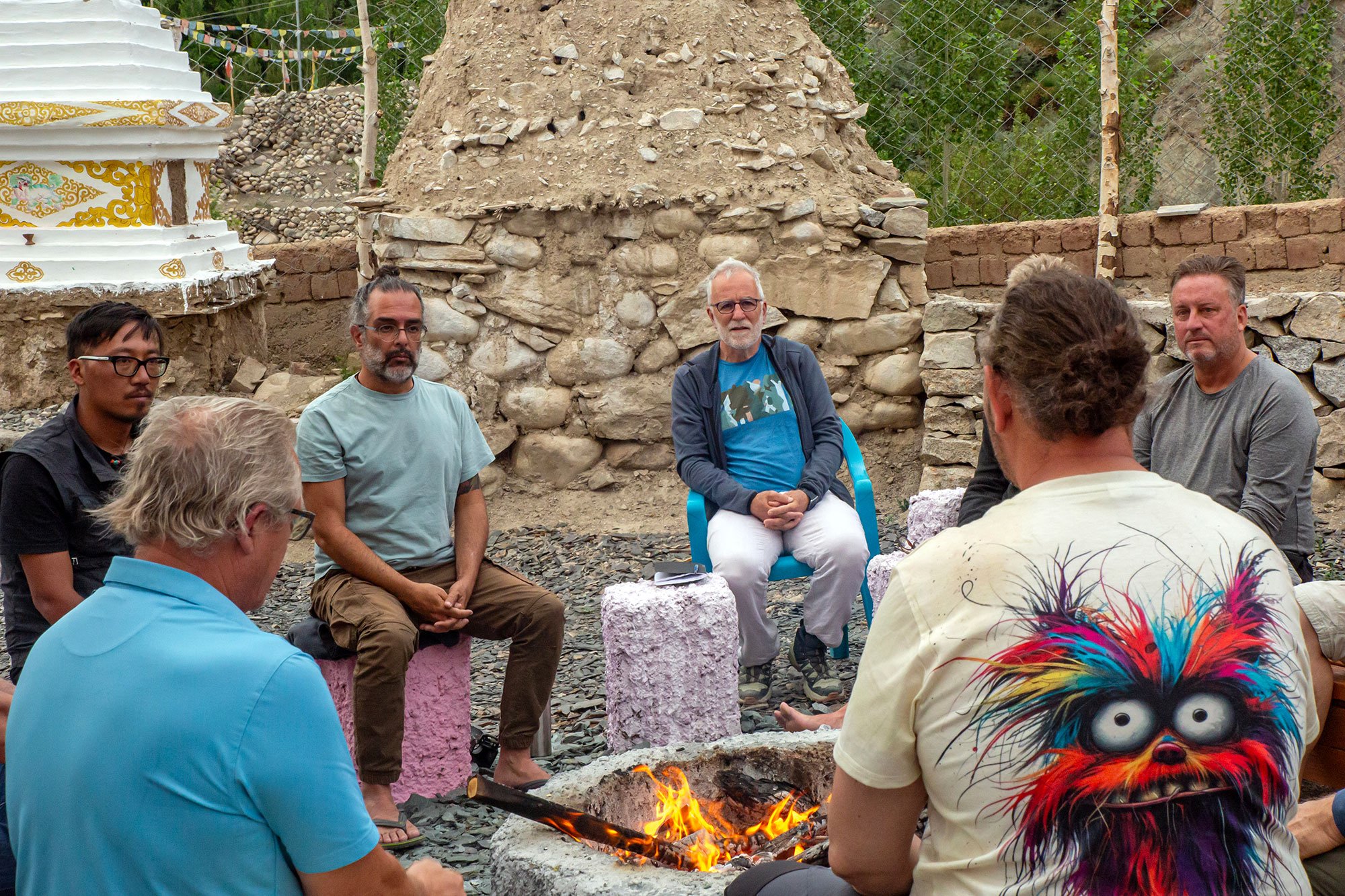
A facilitator's questions can significantly influence the depth of a conversation. Weak questions tend to produce predictable answers. Good questions create space for reflection.
Instead of: "Are you happy with your relationship?" A facilitator might ask: "What is happening in your relationship that you're not talking about?"
Instead of: "Are you stressed?" He might ask: "What are you carrying at the moment that you haven't had much space to acknowledge?"
The purpose isn't to make questions dramatic. It is to make them useful. A skilled facilitator learns when to ask a question, when to leave it alone, and when a participant's own words already contain the question that needs to be explored.
Silence Is Part of the Facilitation
One of the hardest skills for a new facilitator is learning not to fill every silence. Someone finishes speaking. Nobody shares next. Ten seconds pass. It feels longer than it is. The facilitator becomes uncomfortable and asks another question. The moment is gone. But sometimes the silence is where the real work is happening. A few men may need time to find the courage, the moment, or the words. The group may simply need a moment to absorb what has been shared. A facilitator who is comfortable with silence gives the group room to breathe. This doesn't mean every silence should be prolonged. It means the facilitator learns to distinguish between productive silence and stuckness. Again, this is a matter of discernment.
When Conflict Enters the Room
A healthy men's circle will not always be harmonious. Men will disagree. A man may break an agreement without noticing and start giving advice, and another may feel triggered with it. Someone may become defensive. Conflict itself is not necessarily a problem. Sometimes conflict contains important information about what is happening in the group.
The facilitator's role is to help maintain the conditions in which disagreement can happen without becoming personal attack or unsafe behaviour. That may mean slowing the conversation down. It may mean naming what is happening. It may mean reminding participants of the group's agreements. It may mean asking someone to speak from his own experience rather than making assumptions about another man's intentions.
The facilitator doesn't need to eliminate every uncomfortable moment. He needs to know how to stay present when the room becomes uncomfortable. That is a very different skill.
Projection and the Stories We Put on Other Men
None of us enter a circle as blank slates. We bring our histories, expectations, triggers, insecurities and assumptions with us. Sometimes we react to another man based not only on what he has actually done, but on the image we created of him. An assertive man may trigger someone else's feelings of inadequacy. A quiet man may be interpreted as arrogant. A simple reminder of the agreements by the facilitator may be experienced as a personal attack by one of the participants.
A facilitator doesn't need to psychoanalyse the group. But he does need enough awareness to recognize that what happens between people is not always as simple as it first appears. This is another reason facilitation requires more than communication skills. It requires self-awareness. The facilitator must also be able to notice his own reactions.
If a participant irritates him, for example, he needs enough inner awareness to distinguish between: "This man is disrupting the group." and "This man is pushing a button in me." Sometimes both are true.
Boundaries Protect the Circle
Good men's work requires boundaries. This applies to both participants and facilitators. A facilitator needs to understand his responsibility around:
Confidentiality
Physical contact
Personal disclosure
Emotional boundaries
Power dynamics
Consent
Professional competence
Boundaries aren't there to make a men's circle cold or formal. They make trust possible. When people know where the boundaries are, they can participate more freely within them. A facilitator who doesn't uphold boundaries can unintentionally create confusion or harm even when his intentions are good. Good intentions are not a substitute for good practice.
Charisma Is Not Facilitation
Some men naturally draw attention. They're confident, articulate, funny and comfortable speaking in front of groups. Those qualities can be useful. But they don't automatically make someone a good facilitator. In fact, charisma can sometimes become a problem. If it comes imbued with some form of narcisicm, it can make it even worse.
If the facilitator is always the most interesting man in the room, participants may begin looking to him for answers rather than learning to listen to themselves and one another. Good facilitation often requires the opposite of performance. The facilitator may be almost invisible at times. He creates the structure, pays attention to the process, intervenes when necessary and then gets out of the way. The better the facilitator becomes, the less the circle needs to revolve around him.
Leading Is Not the Same as Controlling
There is another common misconception about facilitation. Some people believe that a facilitator needs to control the conversation. He doesn't. Facilitation aims to create participation. A skilled facilitator provides enough structure to keep the group safe and purposeful while leaving enough space for the participants to bring their own experience. This is a delicate balance: Too little structure and the group can become ungrounded. Too much structure and it can become too mechanical, with less space for depth. The facilitator needs to continually read the room and adjust. That is why facilitation is a practice rather than a script.

Think of the Facilitator as a Conductor
An orchestra conductor doesn't play every instrument. He doesn't tell the violinist how to play every note. Instead, he listens to the whole orchestra, noticing timing, or when one section is overpowering another. He knows when to bring something forward and when to create space.
A men's circle facilitator performs a similar function. He isn't there to provide every insight. He's there to help the different voices in the room come together without losing their individuality. The goal isn't for everyone to sound the same. The goal is for all men to be equally heard.

A Facilitator is a Guide, not a Guru
There is a useful balance between being passive and becoming the authority figure. A facilitator needs enough confidence to guide the group. But he also needs enough humility to recognize that he doesn't have all the answers. This is particularly important in men's work. Men can easily fall into hierarchies based on age, confidence, professional success, physical strength, knowledge or charisma. A healthy men's circle doesn't need another hierarchy disguised as personal development. The facilitator can lead the process while remaining part of the human community in the room.
He shares with the same vulnerability and depth that he expects or desires from other men. He owns and acknowledges a mistake. He is open to receive feedback. He can change direction in any moment. These aren't weaknesses. They are examples of the kind of mature leadership a men's circle can model.
Facilitation Is a Learnable Skill
Some men seem naturally good with groups: they listen well, they are comfortable with silence, they notice what others miss. But natural ability only takes you so far. Facilitation involves a collection of skills that can be developed through deliberate practice:
Listening
Questioning
Group awareness
Emotional regulation
Conflict navigation
Boundary setting
Ethical decision-making
Self-awareness
Timing
Presence
Clear communication
Reading about these skills is useful. Practising them is different. Role-play exposes you to situations you may not encounter in ordinary conversation. Receiving feedback shows you what you cannot see yourself. Facilitating an actual group teaches you how different reality can be from what you imagined. This is why experiential training can be so valuable.
What Skilled Facilitation Allows a Men's Circle to Become
When a circle is facilitated well, something interesting happens: the facilitator gradually becomes less important. Men naturally listen and hold space for each other. The group becomes more comfortable with silence. Men take greater responsibility for what they bring into the room. They learn that vulnerability doesn't have to mean losing strength or dignity.
And if the group matures enough, they begin challenging one another without tearing one another down. They develop trust through repeated experience rather than through promises. And gradually, the circle becomes deeper and deeper. It becomes a community. That doesn't happen because the facilitator is extraordinary. It happens because the facilitator has learned how to create the conditions in which ordinary men can show up more fully.
So, Does Every Men's Circle Need a Facilitator?
When a group is intentionally created for personal development, men's work, emotional exploration or deeper sharing, skilled facilitation becomes increasingly important.
The deeper the work, the greater the responsibility. And the more diverse the group, the more important awareness of group dynamics, boundaries and psychological safety becomes. A facilitator doesn't guarantee that every meeting will be deep. He creates the conditions that open up the space for it to happen.
Becoming the Man Who Can Hold the Space
Facilitation is not about being the man with all the answers. It is about being the man who can remain present when there are no easy answers, listening without fixing, allowing silence without becoming uncomfortable, meeting strong emotions without getting overwhelmed by them, addressing conflict without turning it into a battle, establishing boundaries without becoming rigid, guiding the group without ever needing to be the centre of it.
These are not abstract qualities. They are practical skills. And like any skill, they can be developed.
Where to Learn Men's Circle Facilitation
For men who want to develop these skills in practice, The Circle Keeper - Men’s Circle Facilitator Training is a five-day immersive facilitator training taking place at Sacred Grounds CNX in Chiang Mai, Thailand.
The training is built around practicing rather than lectures. Participants work through demonstrations, experiential exercises, role-play, challenging facilitation situations, real circle facilitation and structured feedback.
The training covers psychological safety, trust, group dynamics, deep listening, questioning, conflict, ethics, boundaries and the practical skills needed to launch and sustain a men's circle. It concludes with participation in Sacred Grounds CNX’s community Men's Circle, followed by integration and a closing ceremony.
The intention is simple: to help you become the man who can hold the space.
A men's circle is not created simply by putting chairs or cushions in a circle. It is created through trust, presence, boundaries, agreements, active listening, and through the willingness to stay with what is actually happening, rather than rushing toward an answer, and agenda or a goal. And someone needs to help hold those conditions. That is the work of the facilitator.
A circle doesn't become meaningful because men gather. It becomes meaningful when someone knows how to help them meet one another there.
Get in touch with us if you are interested in knowing more about the training.